Overview
Our team kept noticing the same concern come up among peers: finding off-campus housing after moving out of first-year dorms felt overwhelming and frustrating. Many students shared stories about hidden fees, unclear leases, and unreliable listings.
As we looked deeper, we realized there wasn’t a single resource that truly supported students through this process. Information was scattered across multiple platforms, making it difficult to compare options or feel confident in decisions. This led us to our design question: How might we help college students transitioning to off-campus housing access transparent, reliable information about leases, fees, and landlord credibility so they can make informed housing decisions?
My Roles
UX Design: Wireframes, Prototypes, Research Synthesis
Teammates
Ruby Lee
UX Design
Samuel Mixton
User Research
Goried Tian
Documentation
Aditya Shirodkar
Documentation
Tools
Figma
Timeline
Jan 2024 - Mar 2024
Reopened project:
Feb 2026 - current
Process
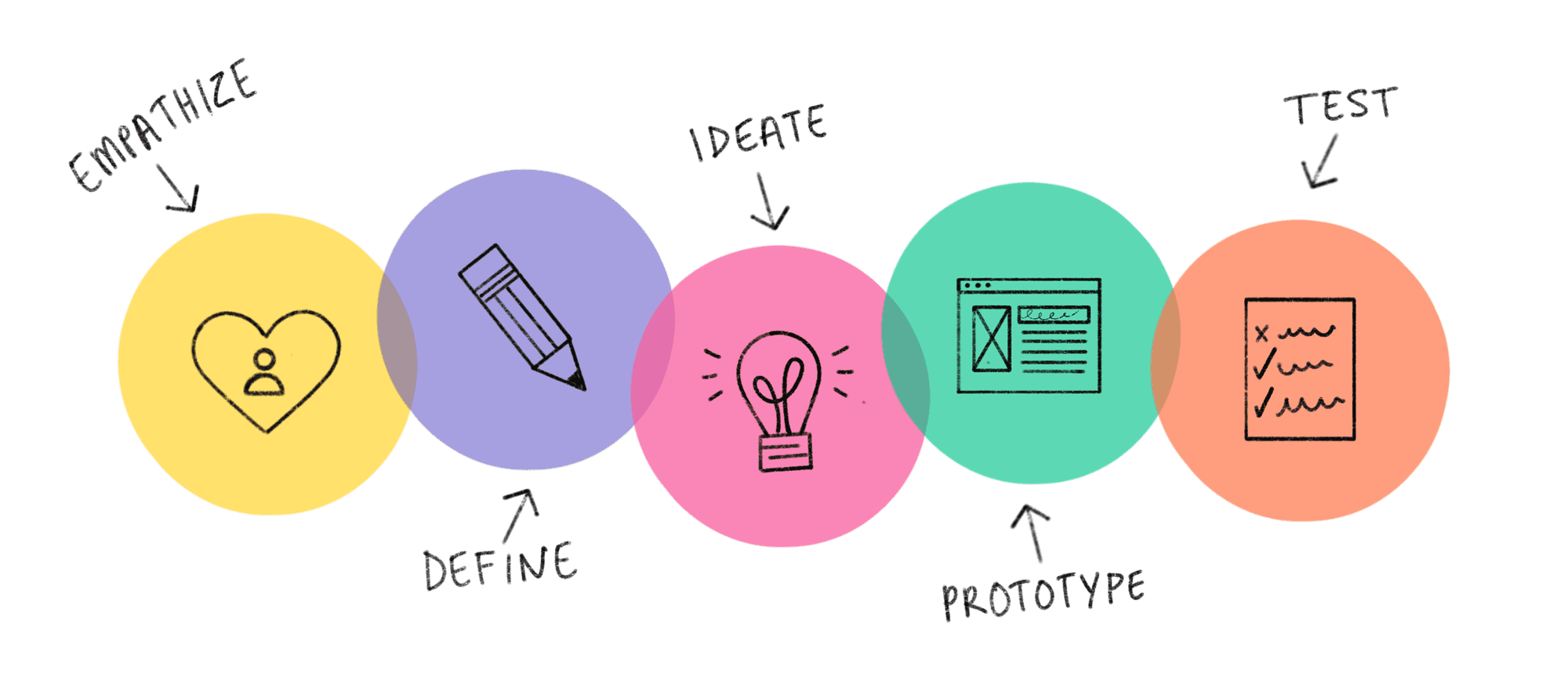
Used Design Thinking Framework
We followed a design thinking approach, using key insights from user research to explore and iterate on potential solutions before arriving at our final product and feature set.
Empathize
Surveyed 85 Students to Understand Off-Campus Housing Challenges
We collected 85 responses from University of Washington students to better understand their experiences navigating the transition to off-campus housing and the challenges they face along the way. The survey included a mix of multiple-choice and short-answer questions to capture both trends and personal experiences.
To guide our research, we focused on the following questions:
What is students’ current living situation?
How confident do students feel during the housing search process?
What concerns or uncertainties make students hesitant about off-campus housing?
What tools and resources are students currently using?
Where does the process feel unclear, overwhelming, or stressful?
Have students encountered misleading or unreliable listings?
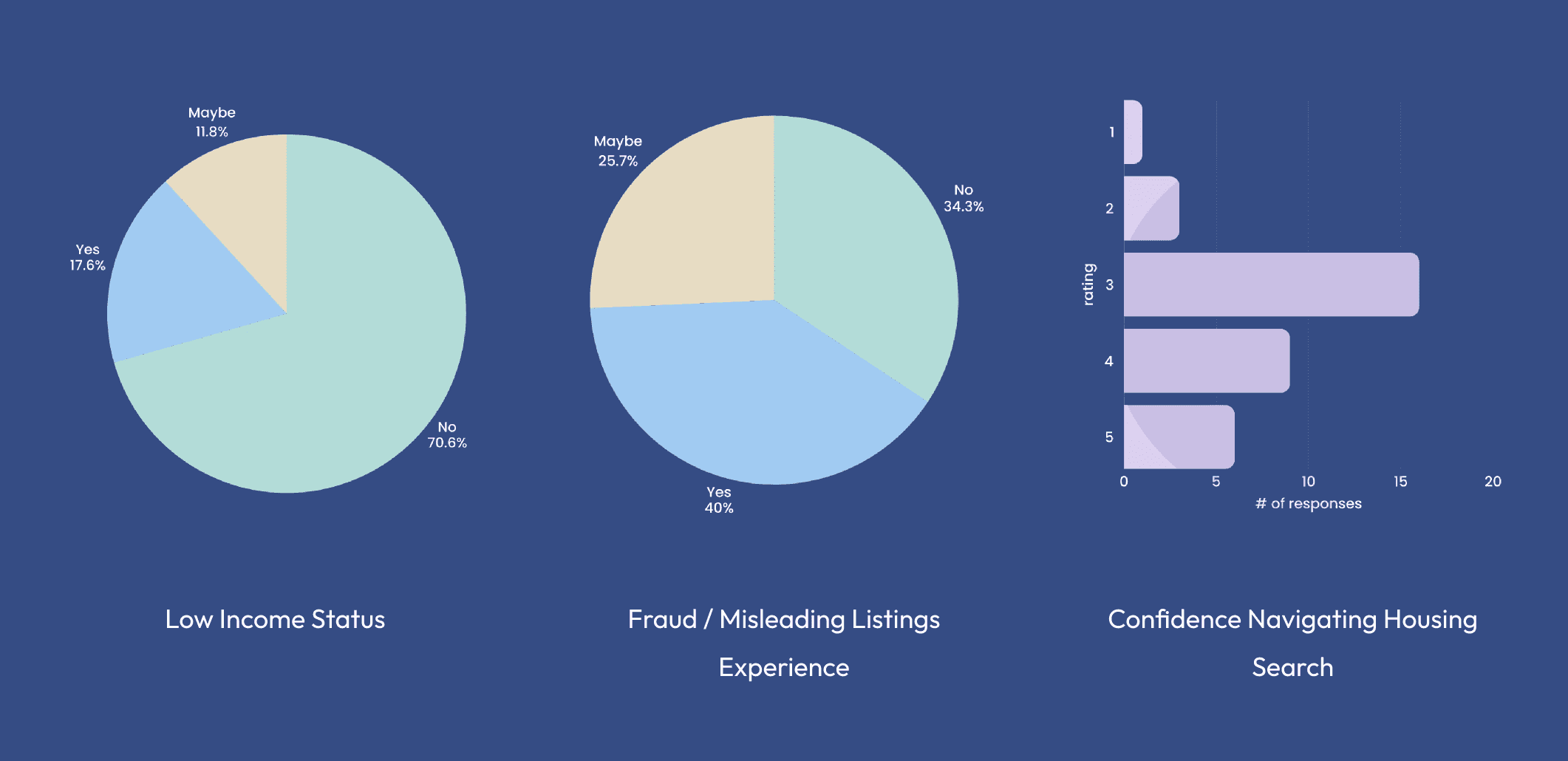
Survey Statistics on Low Income Status, Fraud/Misleading Listings Experience, and Confidence Navigating Housing Search
Student Statements
Question: Have you encountered fraudulent or misleading listings while searching for off-campus housing?
Question: If you have hesitations about moving off-campus, why?
Rent monthly prices are not what they seem… hidden fees such as utilities and other expenses.
I was told I could do a 9 month lease… which turned out to be a clear lie. They only offered 12 month leases and if you signed but changed your mind it was $9000 to get out of it.
Landlords, high apartment prices near campus.
Fear of safety and security, price and unfamiliarity with the area.
Define
Research Synthesis: Uncovering the 4 Key Struggles Students Face
From the surveys, we found 4 common themes among student responses.
Click to view more info.




Ideate
Choosing the Right Approach for Student Renters
We explored three potential solutions to support students navigating off-campus housing, grounding each direction in the challenges identified through research. By comparing their strengths and limitations, we identified the approach that could most effectively address issues of trust, transparency, and confidence at scale.
| Solution 1 | Solution 2 | Solution 3 | |
|---|---|---|---|
| Description | Printed guide with housing tips, search support, and tenant resources | Panel connecting students with housing advice and real renter experiences | Mobile app for first-time renters with trusted reviews, resources, and guidance |
| Advantages | Easy to distribute and promote | Direct insights from experienced renters | Scales across locations and users |
| Disadvantages | Limited reach beyond one area | Requires experienced speakers to run | Depends on active user contributions |
Chosen Solution: Mobile Platform
A mobile platform was selected as the final direction, as it is the only solution that can scale to support students consistently. It enables transparent information, builds trust through shared experiences, and supports confident decision-making throughout the housing process.
Prototype
Designing Features Based on the Key Research Insights
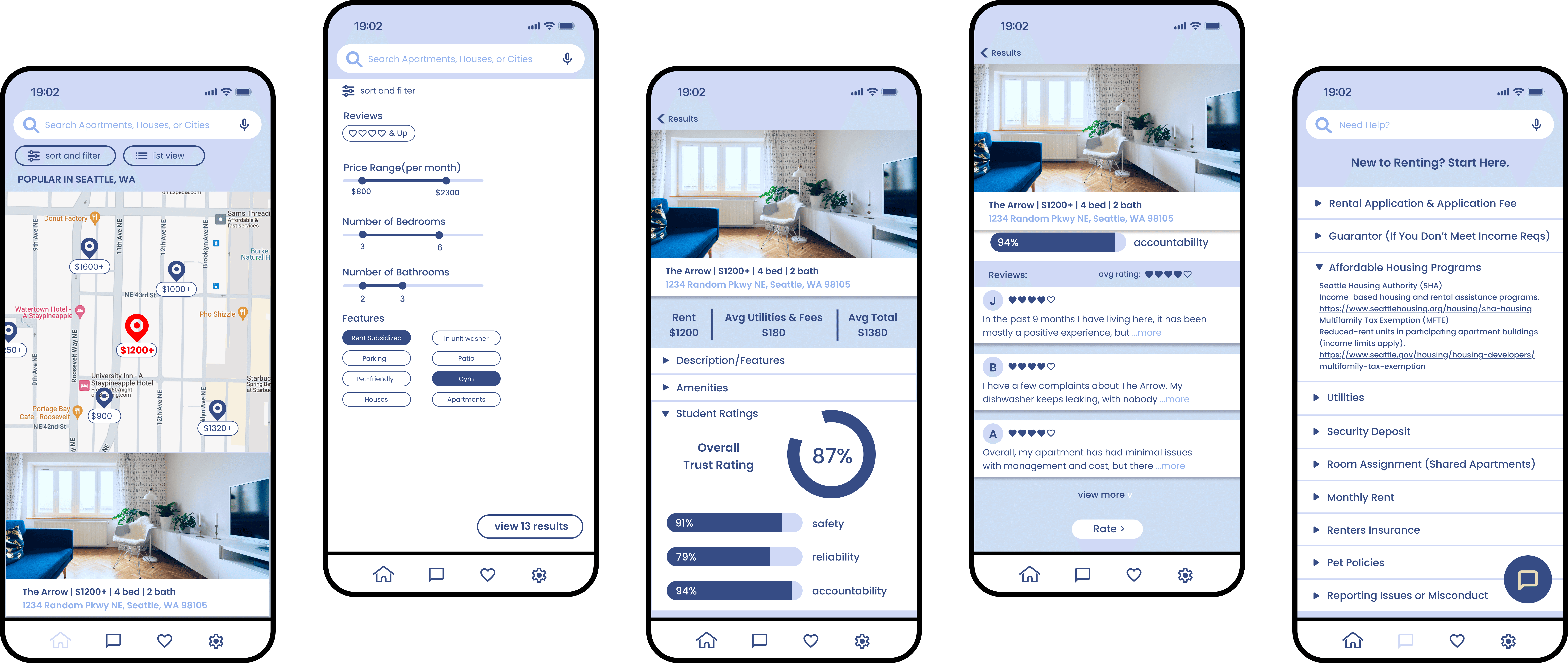
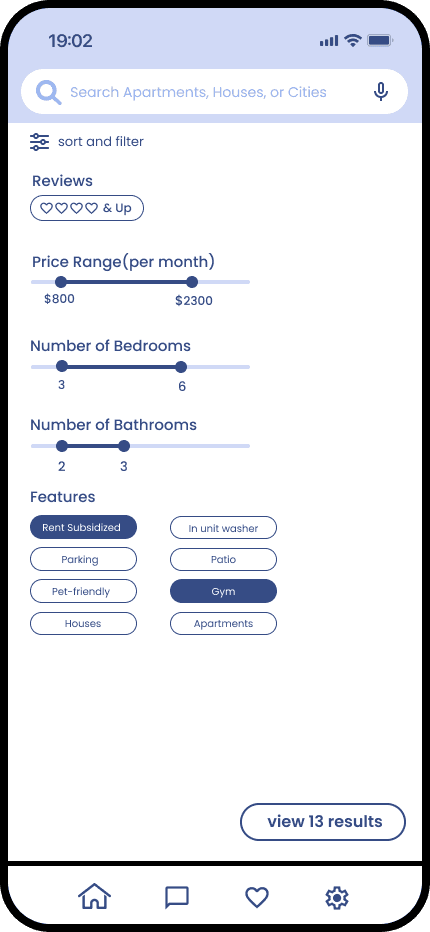
Initial wireframes were developed from key research insights, featuring listings, filters, map-based browsing, reviews, and comparison tools.
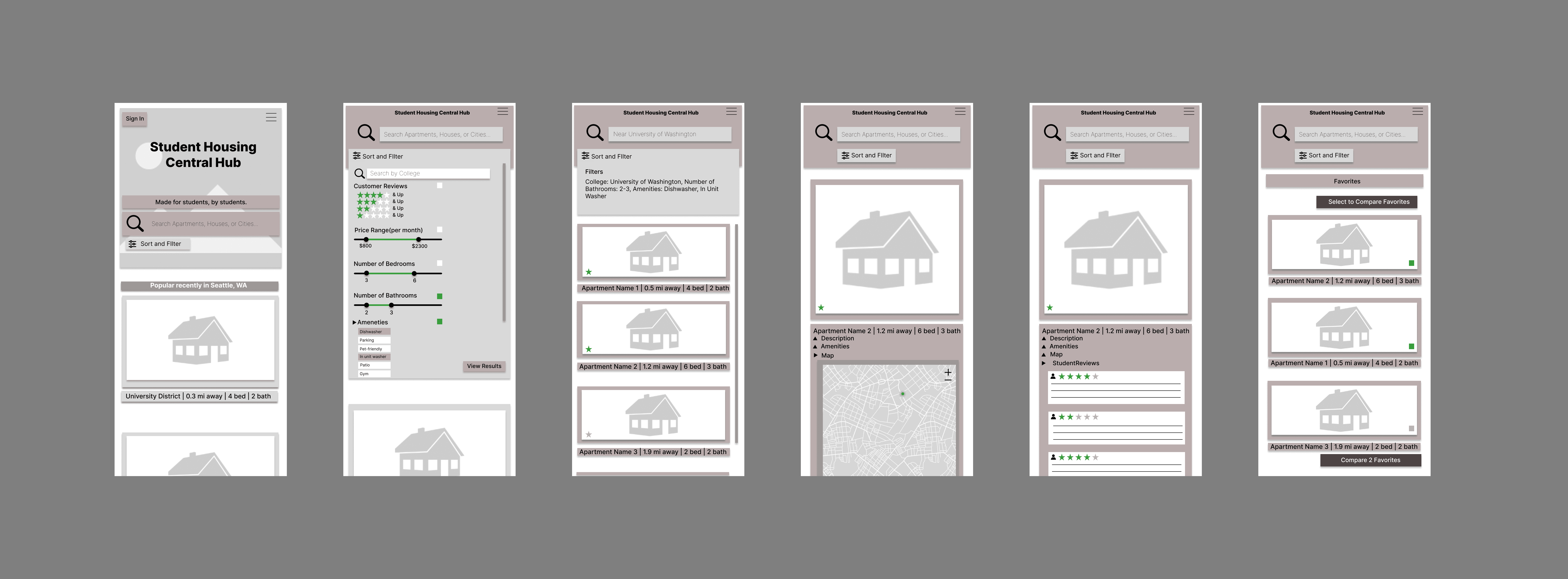
Initial Wireframes created in Figma based on User Research Insights
These wireframes were developed into an initial high-fidelity prototype that implemented the core features. However, the experience still lacked clarity, hierarchy, and trust.
Revisiting NestQuest: From First Concept to Refined Experience
NestQuest began as my first UX project. While it introduced the right features, the experience lacked clarity, structure, and trust. Two years later, I revisited it to redesign the experience with a stronger focus on usability and decision-making.
NestQuest, Reimagined
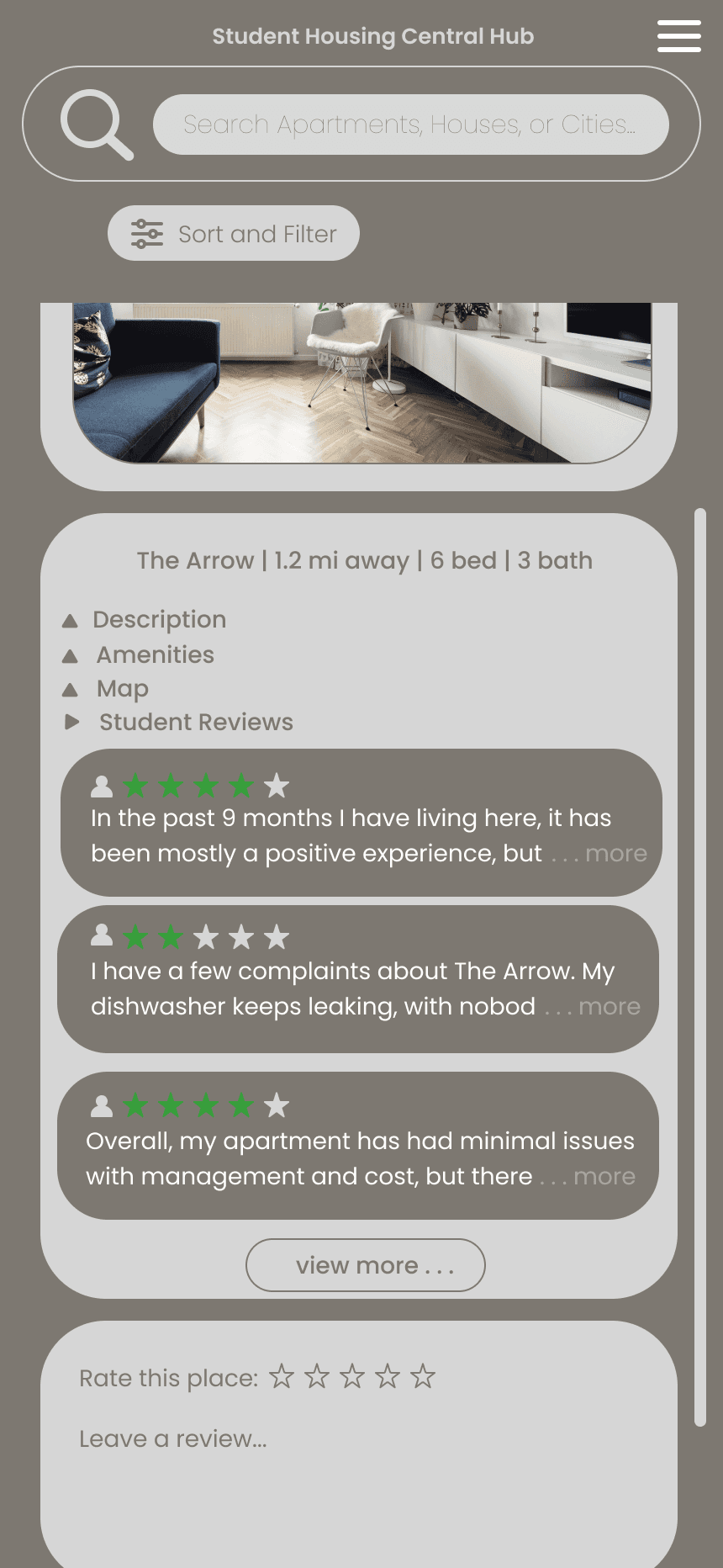
Before
After
Viewing a Listing: Structured for Clear Decision Making
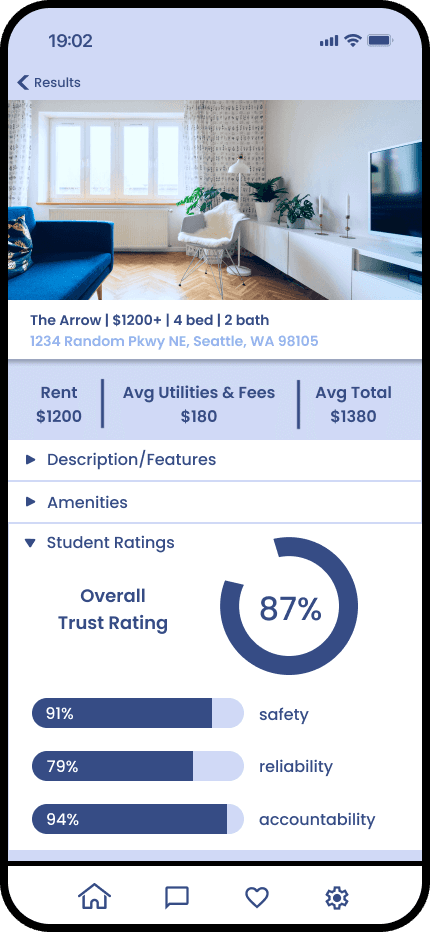
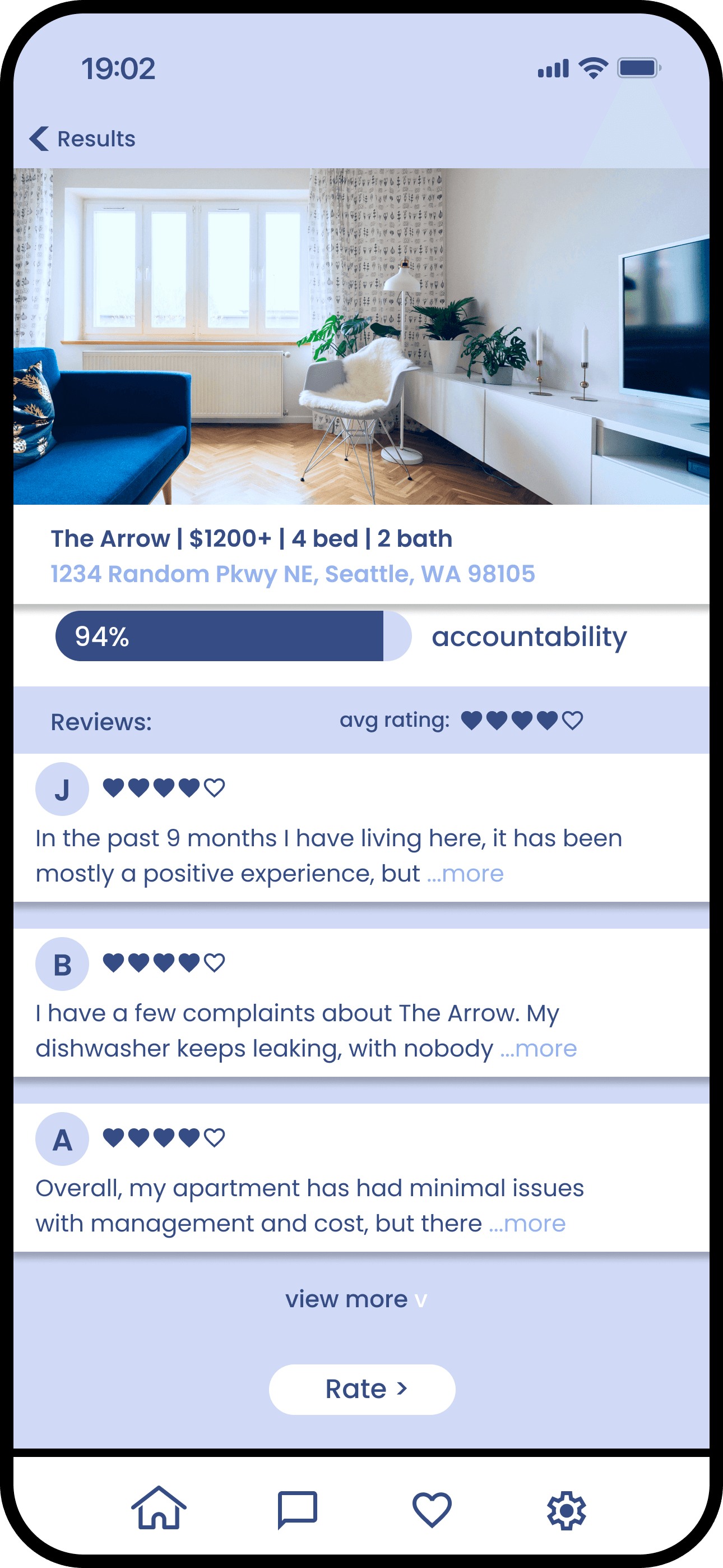
The listing page holds key details like pricing, trust scores, and reviews. They are organized and revealed step by step, helping students compare options without feeling overwhelmed. This structure makes it easier to understand listings and make more confident housing decisions.
What changed?
Introduced a Trust Rating system to summarize key accountability metrics
Added transparent cost breakdowns for clearer pricing
Moved rating into a separate Rate action to simplify the interface
Map Toggle: Spatial Awareness & Safety Context
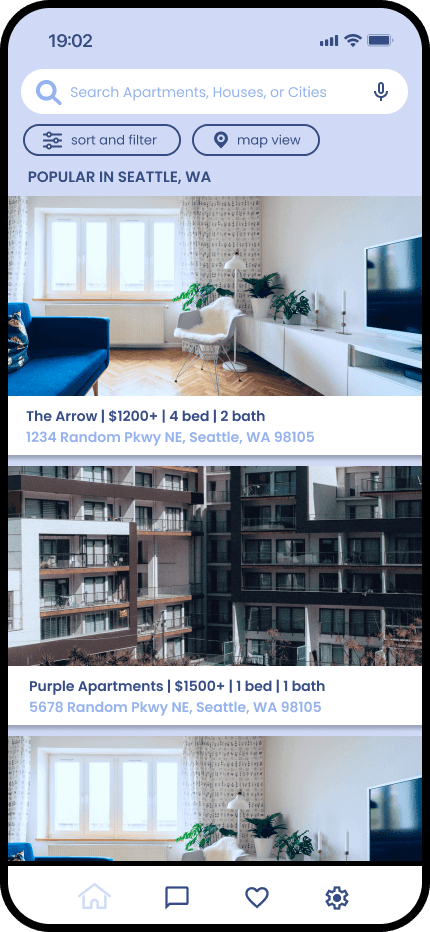
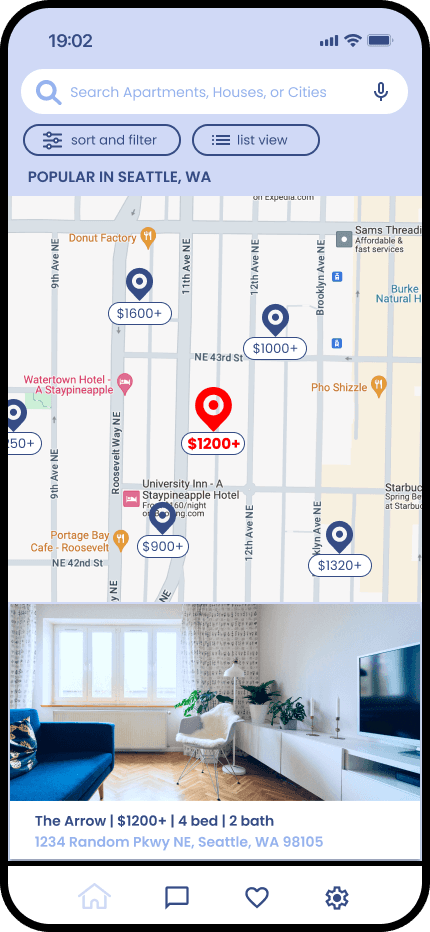
The browsing page displays a key housing card, such as the listing's name, price, rooms, bathrooms, and address. Additionally, students are able to toggle between a list and map view feature to support geographic comparison and increase neighborhood awareness.
What changed?
Added price directly to listing cards for easier comparison
Improved card hierarchy & addition of a map view toggle button
Added a map feature into a dedicated map view toggle on the main listings page
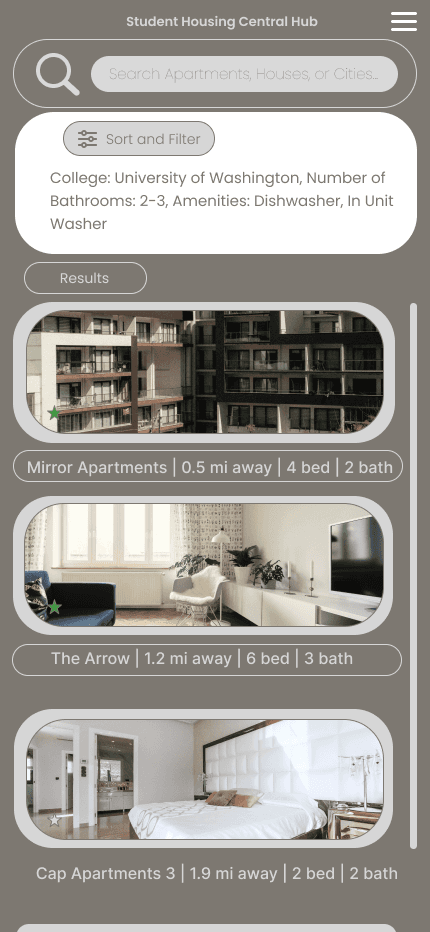
Before
After
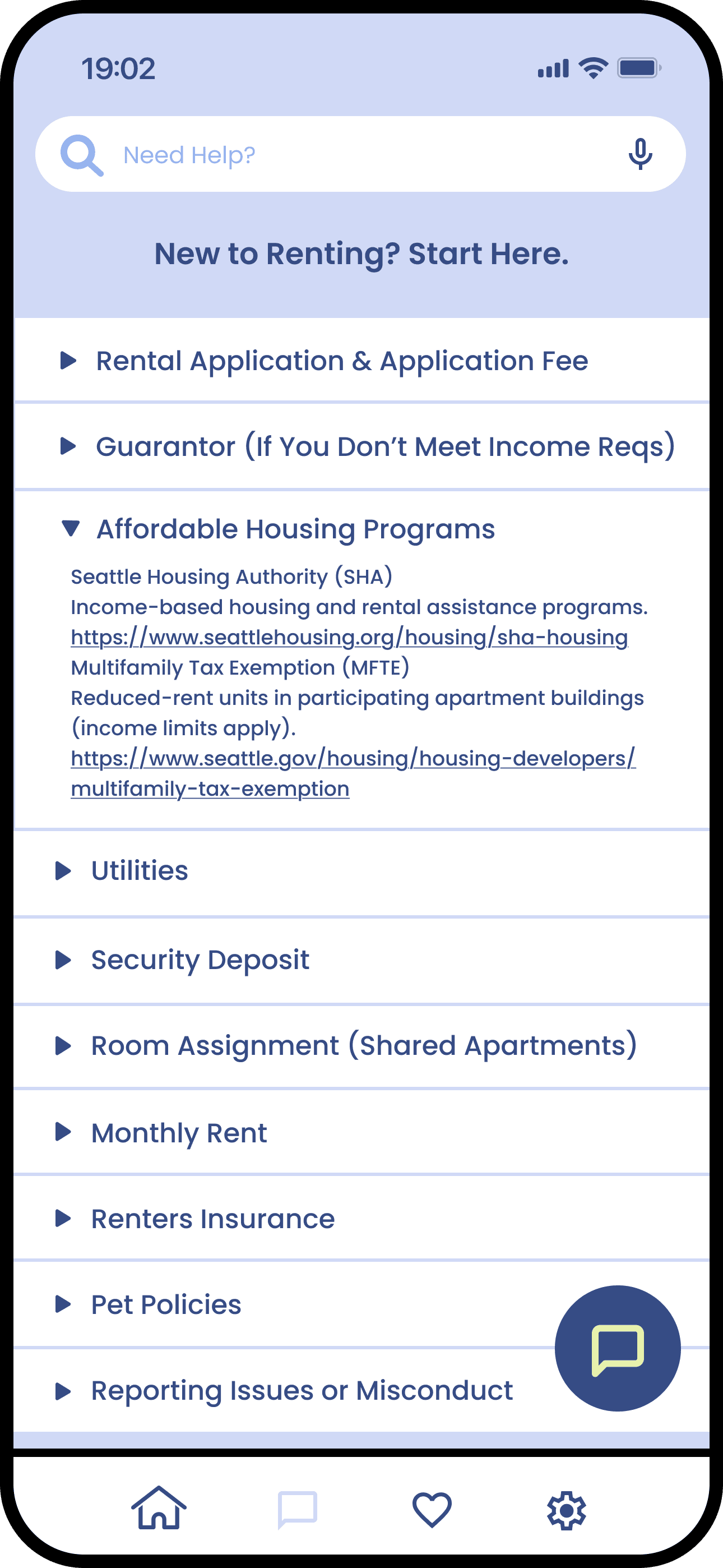
FAQ: Addressing the Information Gap for New Renters
An FAQ section supports students who may be renting for the first time. It includes searchable guidance, an AI chatbot for quick questions, and explanations of common rental topics such as application fees, guarantors, utilities, and affordable housing programs.
This feature was introduced toward the end of the design process to address the information gap many first-time student renters face.
Showcase
Building a Better Experience for Students
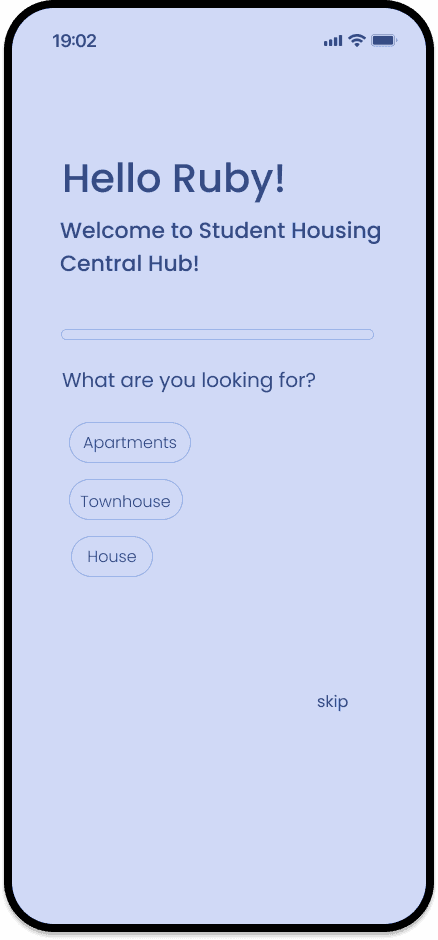
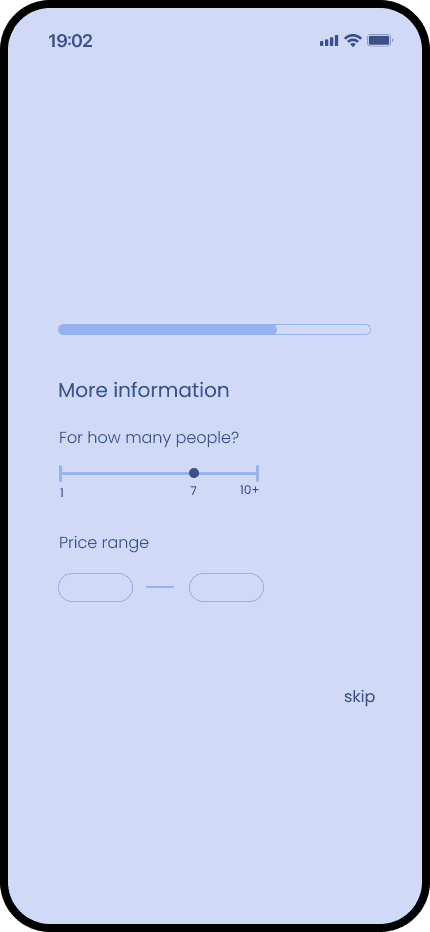
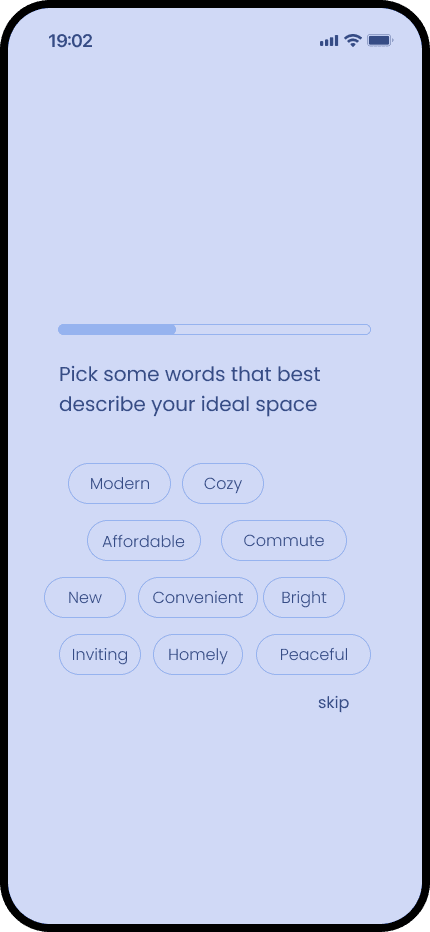
After revisiting NestQuest, this iteration focuses on clarity and trust. We are currently conducting user testing to complete the design thinking cycle and will continue refining the experience based on feedback.
Onboarding
Listing
Filter & FAQ
Reflections

Lessons Learned: A Challenging and Rewarding Result
Translating User Insights
Understanding student struggles and designing a solution that fits their needs are different things, and I had the opportunity to learn how to do it: through practice, iteration, and exploring different solutions.
Designing for Simplicity
People don't always need novel and complex solutions, but something simple enough to help them reach their goals. I was able to go back to the basics while revisiting this project and include a simple but necessary map view and FAQ page.
Consistency is Key
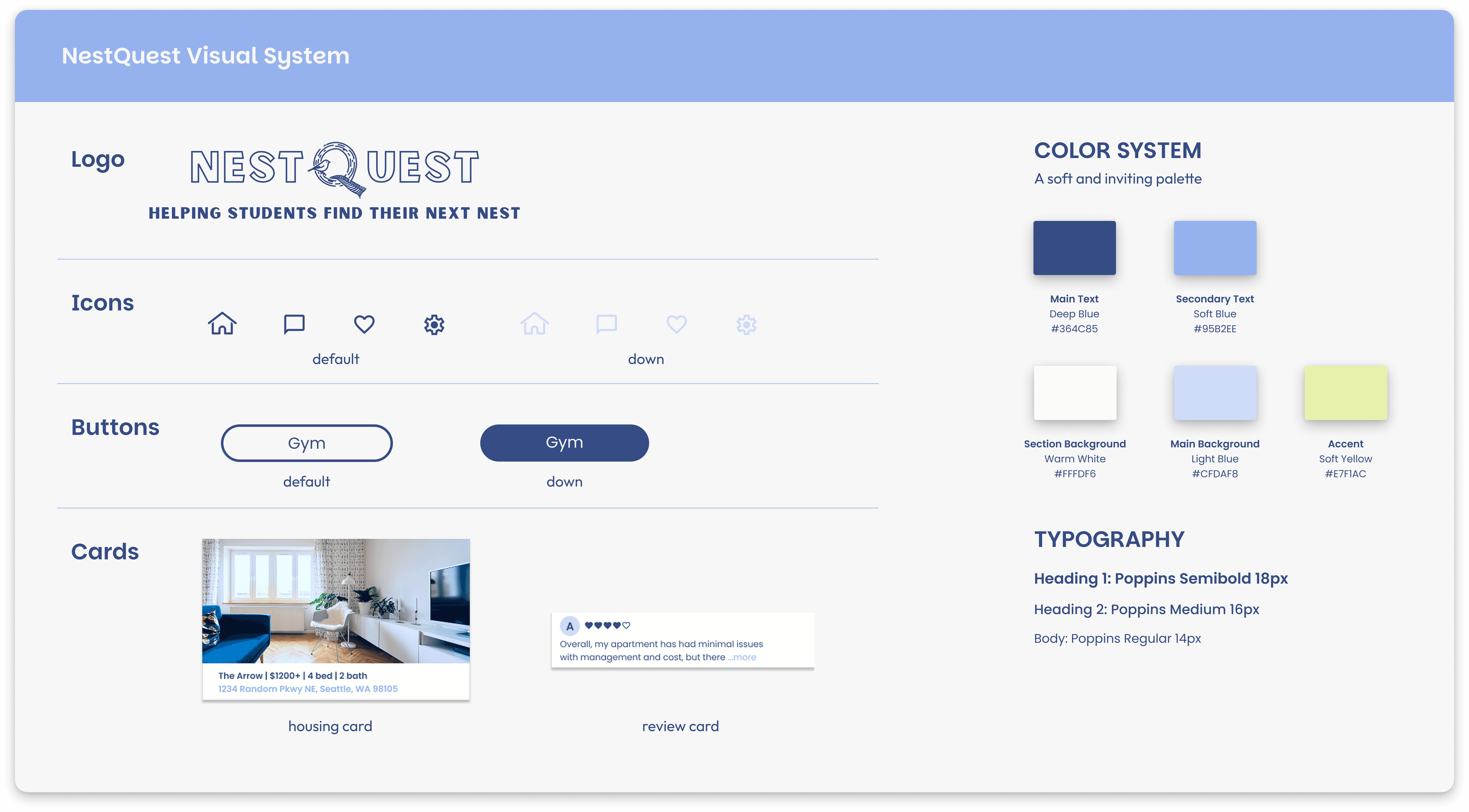
A consistent styling guide is important to help organize the information displayed for all of the items mentioned in the visual system. Revisiting the project and seeing the improvements in my skillset also gave me the confidence to keep designing solutions for people!
Made by Jenny Zhang