My Role
Game Design
Team
Jenny Zhang
Game Design
Isabel Saccone
User Experience
Bouba Katompa
User Research
Rohan Simha
Development
Lena Trieu
Creative
Timeline
Jan 2025
-
Mar 2025
Tools
Figma
Adobe Photoshop
An immersive drunk driving awareness game
We’ve all heard “don’t drink and drive”, but in the moment, it’s rarely that simple. Final Destination is a decision-based game set after a night out: you decide how to get home, and each option branches into new situations. Some choices feel small until their effects compound.
The goal isn’t to lecture, but to let players feel how one decision leads to the next, so the tradeoffs read as lived sequence, not abstract advice.

WHY IT MATTERS
Impaired driving remains a leading cause of death and serious injury for young drivers in the US, often in social situations where peers, convenience, and confidence feel more important than safety.
This project is aimed at high school students and young adults: people who may already “know” the risks but haven’t had to weigh legal, social, and safety consequences in a single, connected chain of choices.
USER RESEARCH
Interviews
We interviewed individuals about their experiences with driving under the influence. Driving typically occurred after social events, where decisions were influenced by convenience, such as avoiding Uber costs or retrieving a car later. Participants also described feeling more confident while impaired, which often led to riskier behaviors like speeding.
Takeaways
Convenience often outweighed safer alternatives
Confidence increased while impaired, leading to riskier driving behavior
Awareness of risks did not always prevent the behavior
Consequences (e.g., DUI charges, court processes) created ongoing stress
Educational approaches are more effective when they feel engaging rather than preachy
Consequences & Statistics
We examined the scale and impact of drunk driving to better understand its risks.
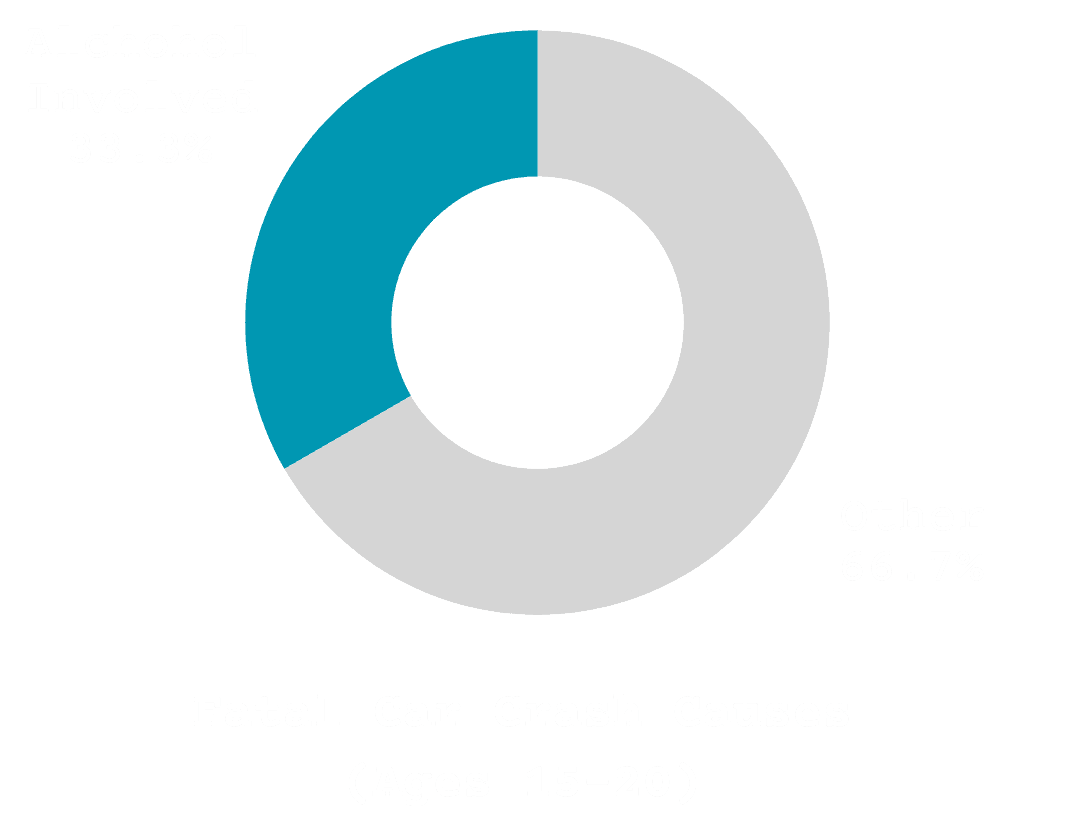
Legal and financial costs can range from thousands in fees to long-term impacts (e.g., license suspension, criminal record) ->
Consequences extend beyond accidents to social and professional consequences
Secondary Research
We reviewed online discussions, existing campaigns, and prior research to understand broader behavior patterns and effective interventions.
Behavior Patterns (Online Discussions)
Drivers often underestimate their level of impairment
Confidence increases after repeated behavior without consequences
Convenience and perceived control influence decision-making
Existing Solutions
Campaigns are most effective when they are relatable and emotionally engaging ->
Simulations and games are effective through experiential learning rather than direct instruction ->
Existing physical simulators are very expensive ->
Current drunk driving awareness games on the market focus on simulating the experience of drunk driving behind the wheel
Key Insights
1. Decision-making is influenced by situation and convenience
Driving under the influence often occurs in familiar social contexts (e.g., parties, late nights), where convenience outweigh safer alternatives.
2. Perceived control under the influence leads to increased risk-taking.
Many individuals feel more confident while impaired and underestimate their level of intoxication, leading to riskier behaviors.
3. Lack of immediate consequences leads to repeated risky behavior.
Repeated experiences without negative outcomes create a false sense of safety, making individuals believe they are unlikely to face consequences.
5. Awareness alone is ineffective without engaging experiences.
Although many individuals understand the risks of drunk driving, traditional education methods often feel preachy or unengaging, reducing their impact on real decision-making.
OPPORTUNITY STATEMENT
There is a gap in preventative education tools that simulate the complexity of drunk driving situations. This project leverages interactive gameplay to model unpredictability, chance, and consequences, encouraging users to make safer decisions through experience rather than instruction.