
Overview
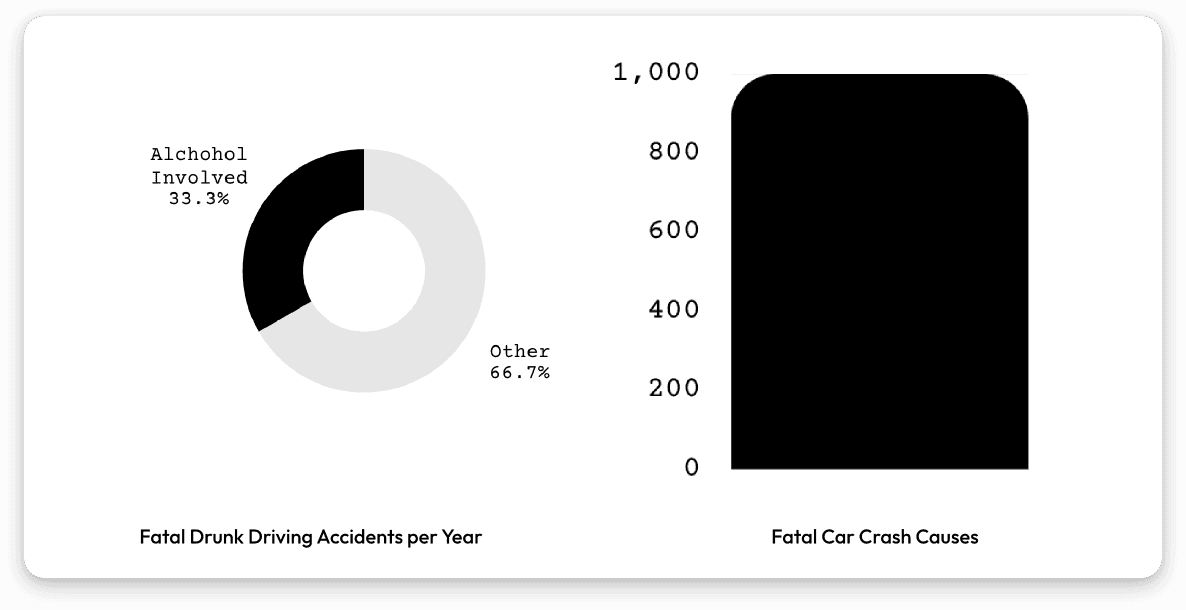
Impaired driving remains a leading cause of death and serious injury for young drivers in the US.
This often occurs after social situations where convenience and confidence feel more important than safety. This video game is aimed at adolescents who may already “know” the risks but never encountered the legal, social, and safety consequences in a single, connected chain of choices.
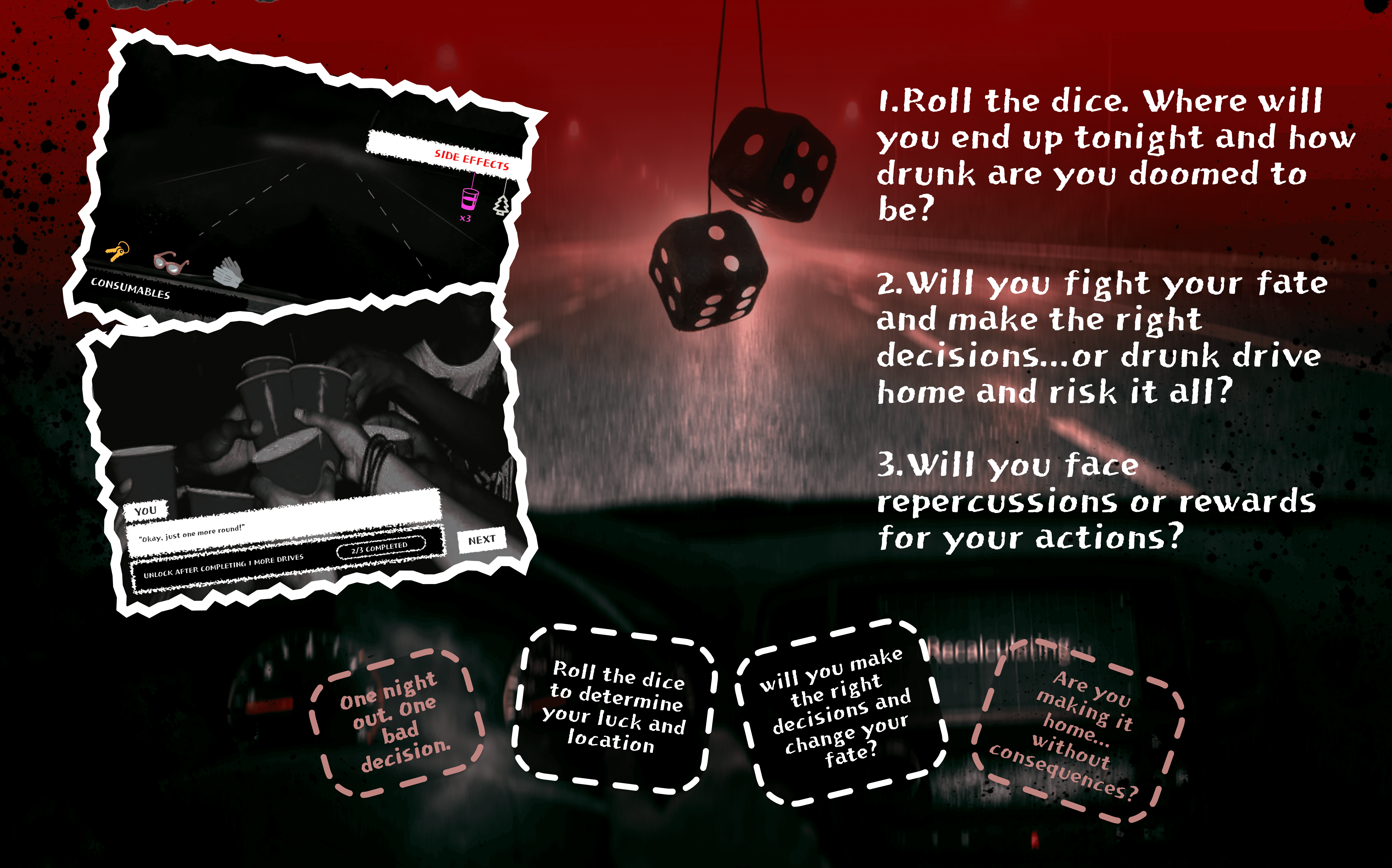
Final Destination is a decision-based video game set after a night out: you decide how to get home, and each option branches into new situations. Some choices feel small until their effects compound. Our team wanted to explore: How might we let players experience the negative rippling effects of driving under the influence without lecturing?
My Roles
Game Design: UX Design, Story Wireframes/Prototypes, Research Synthesis
Teammates
Isabel Saccone
UX Design
Bouba Katompa
User Research
Rohan Simha
Development
Lena Trieu
Visual Design
Tools
Figma
Adobe Photoshop
Timeline
Jan 2026 - Mar 2026
(10 weeks)
Process
Designing for Impactful Play
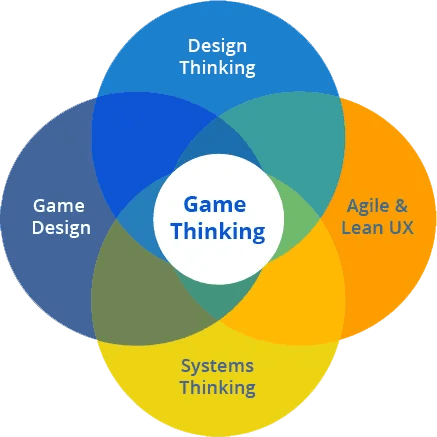
We followed a design thinking approach throughout the game design process. Insights from user research guided our decisions, while systems thinking helped us continuously iterate to create an experience that is fun, meaningful, and impactful.
Empathize
Understanding People with a History of Impaired Driving
To create an experience that prevents impaired driving, we did some research to understand why it happens and the real-life consequences people deal with afterwards.
Participants described how consequences like DUI charges and court processes created lasting stress, yet awareness of these risks alone was not enough to change behavior. Many reported increased confidence while impaired, leading to greater risk-taking, and in the moment, convenience often outweighed safer alternatives. Insights from online discussions on Reddit reinforced these patterns, showing that drivers often underestimate their level of impairment, develop a false sense of control after repeated behavior without consequences, and prioritize convenience when making decisions.
Define
Bridging the Gap Between Awareness and Action
Current solutions reveal a gap between awareness and action. Existing tools are either expensive or focus only on driving, missing the broader decision-making process. At the same time, interviews and online discussions showed that people often underestimate impairment, gain confidence over time, and prioritize convenience. Together, these findings shaped our key research insights, highlighting the need for accessible, preventative tools that reflect real-world complexity and encourage safer decisions through experience.
Click to view more info.


Ideate
Defining a Core Gameloop
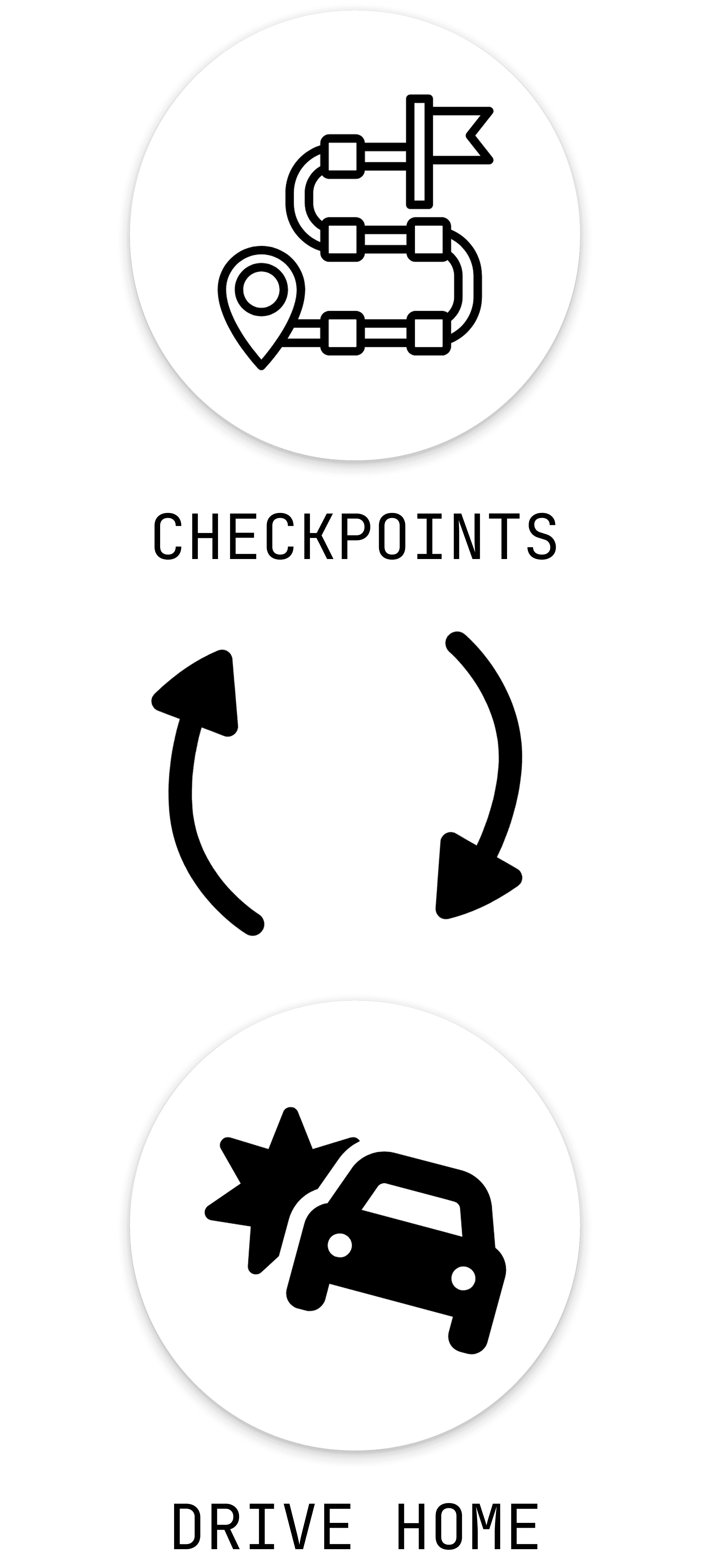
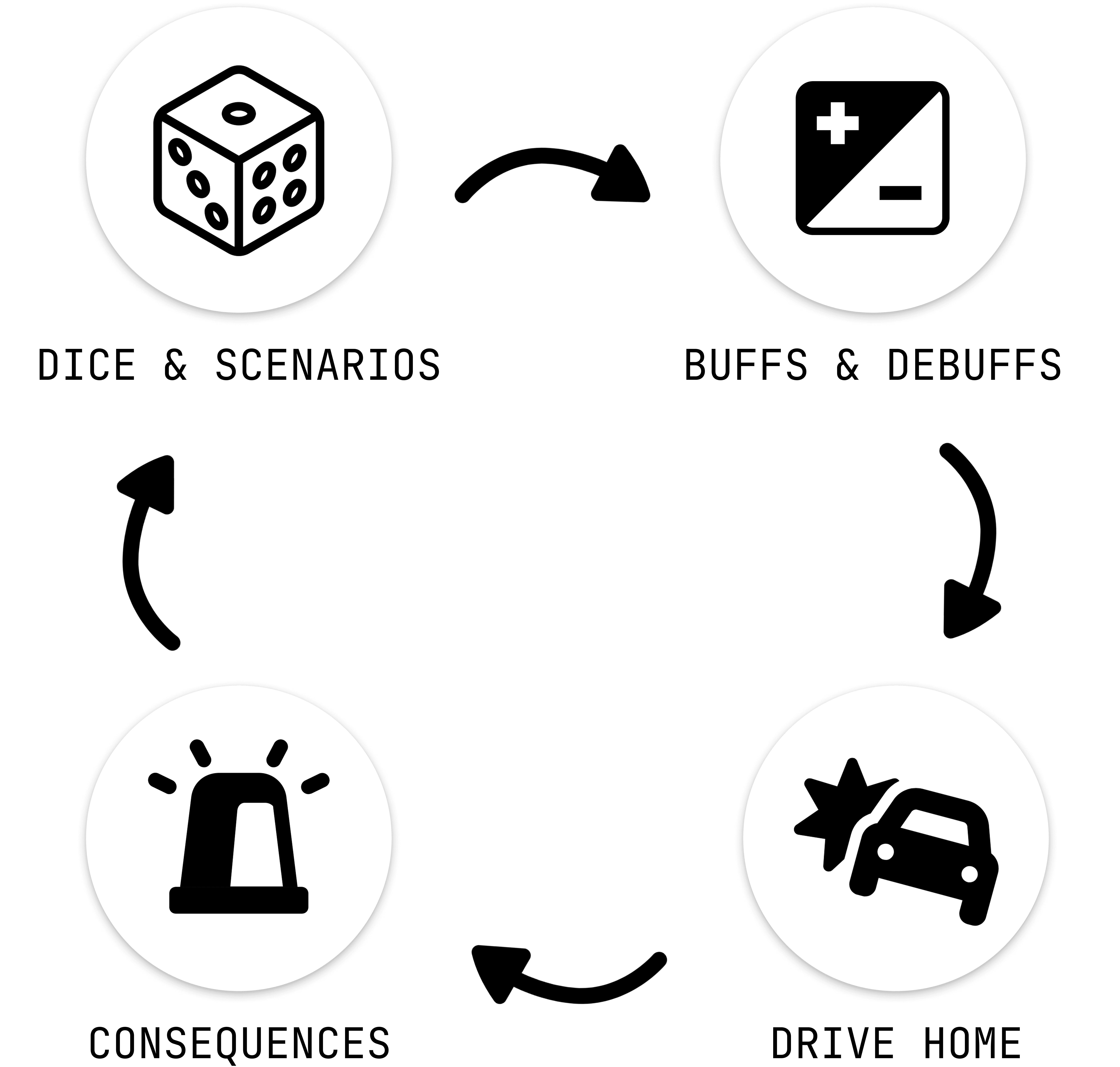
We explored and defined the core gameloop and game pillars before deciding on specifics, to ensure the experience was aligned with our goals.
Changing the Core Loop
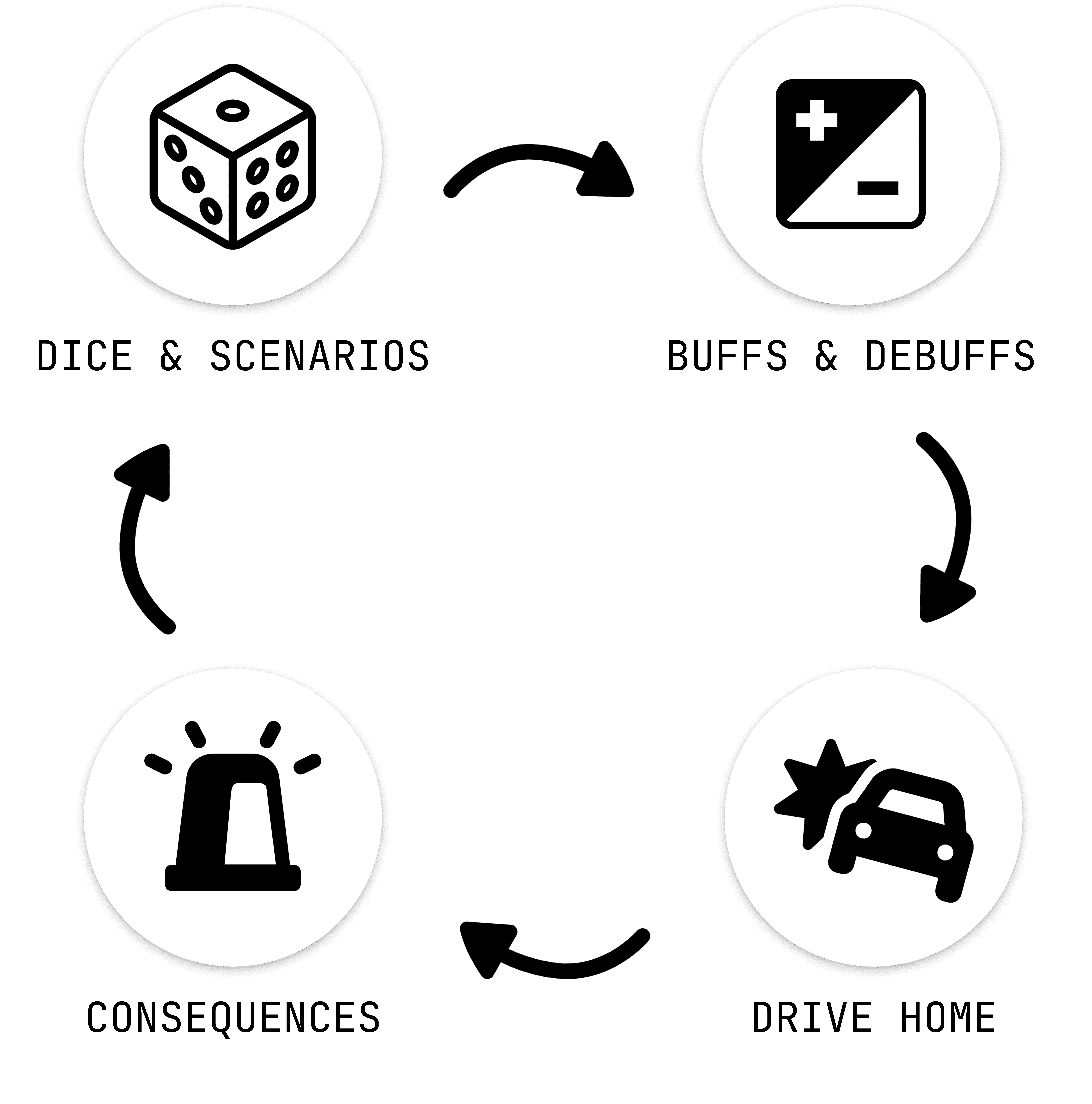
During early concept design, we expanded the core loop to something more than a endless driving simulator. This gave our game a chance to stand out amongst current drunk driving awareness games focused on the simulation of intoxication behind the wheel. The randomness of intoxication at each driving checkpoint became the "Dice" portion to better show how situation and social pressure may seem random when chances to drive intoxicated occurs.
Game Design Pillars
The four principles that shape every decision in the Final Destination



Prototype
Designing an Immersive Experience
Each iteration focused on creating building an immersive experience that follows our core game pillars.
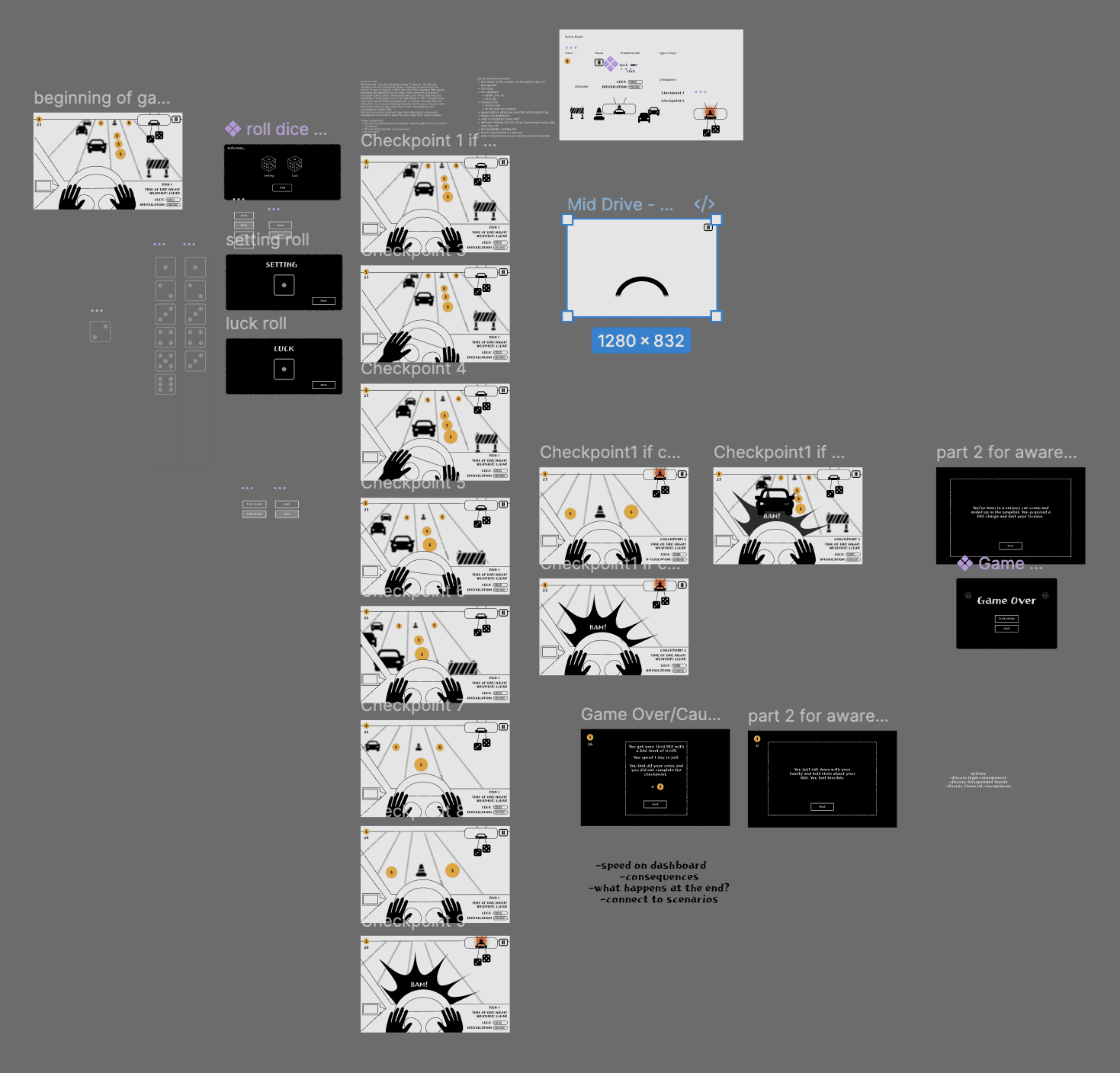
Initial Wireframes created in Figma based on the Core Gameloop
User
Testing
Gaining Valuable Feedback From Playtesting
There were 2 key improvements we implemented after receiving valuable insight from playtesting.
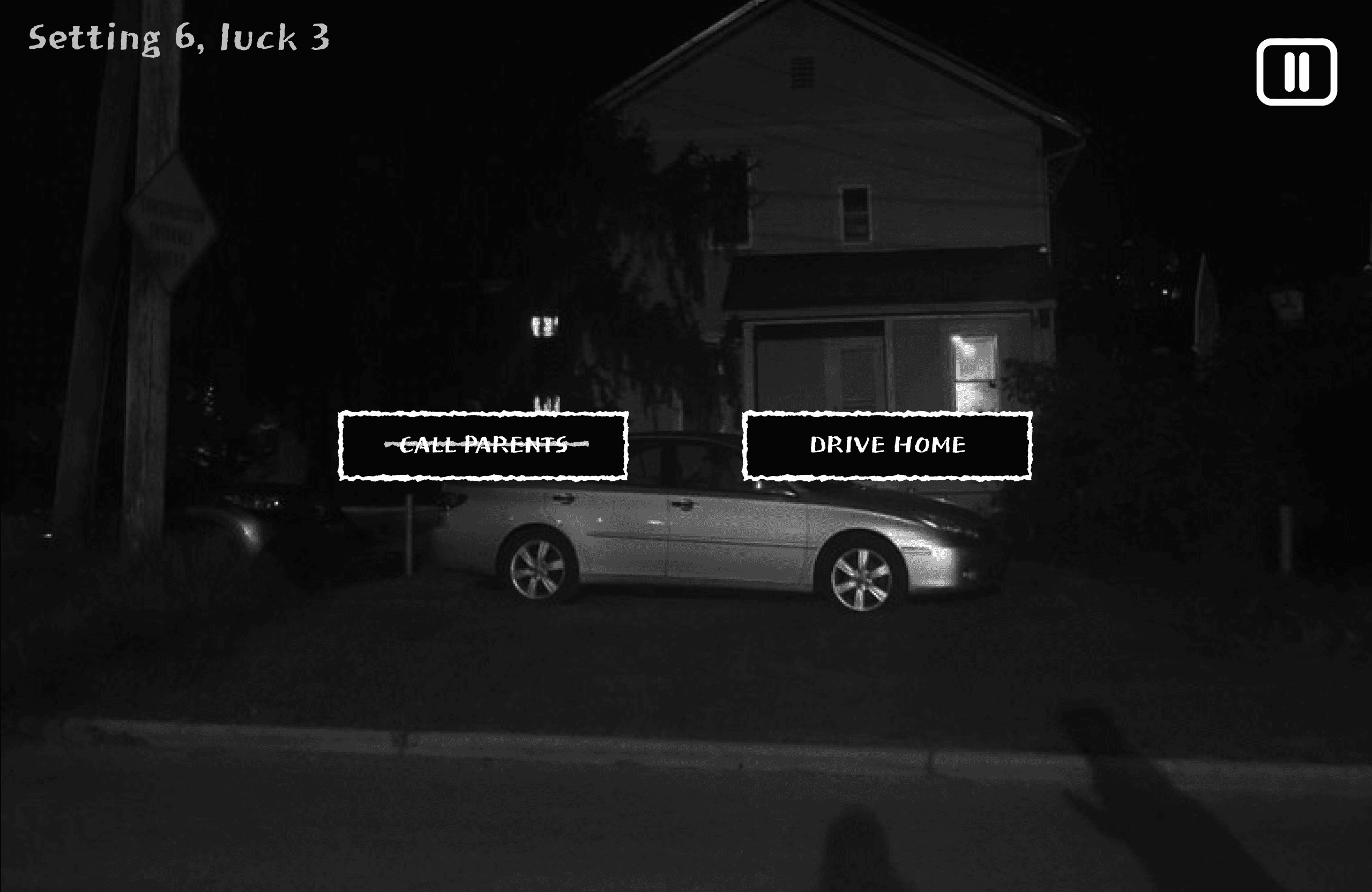
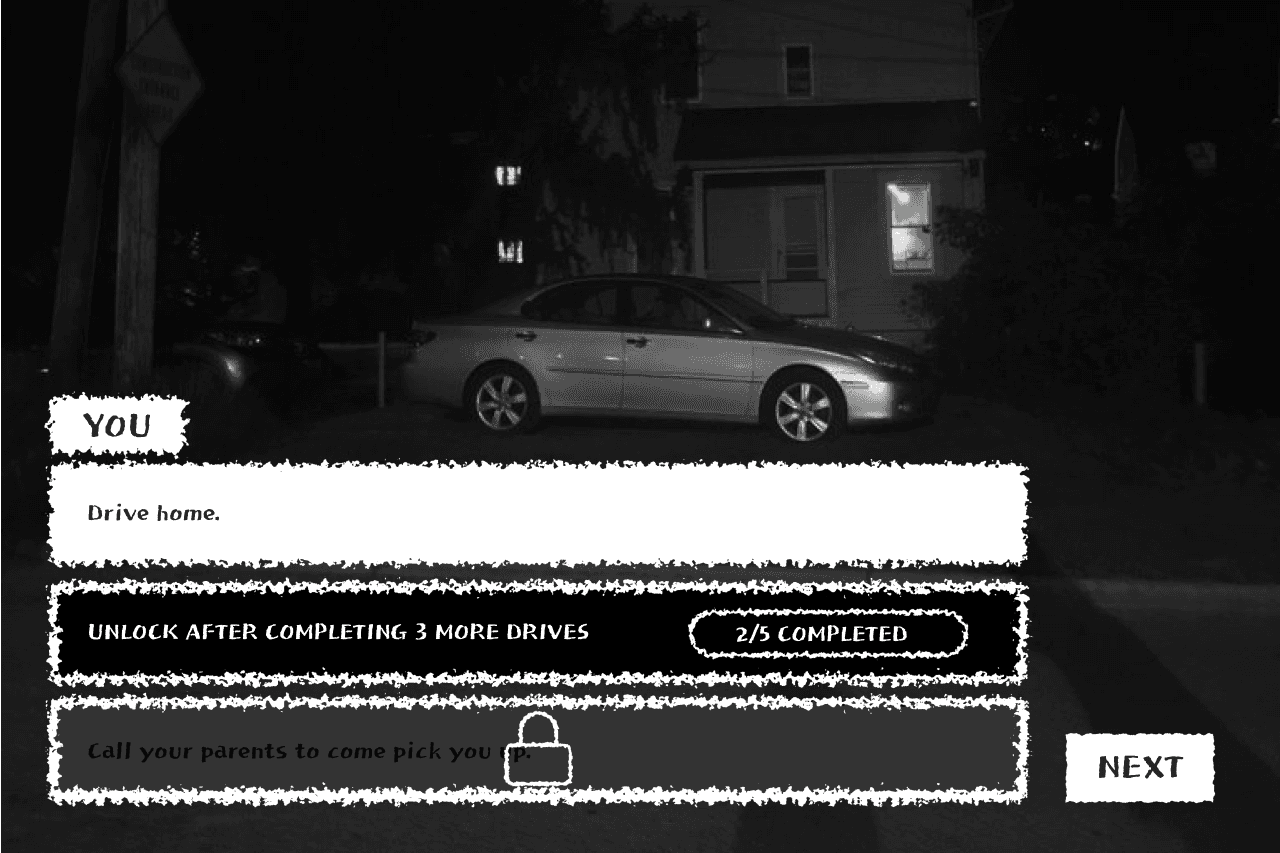
Improvement of Scenario Branching
Originally a one-way decision, playtesting revealed that players felt forced to choose only one option. In the updated version, we added additional feedback text for locked alternative path to make the decision feel more intentional. This helped frame the moment more like part of the story, while also reinforcing that safer choices are something the player has to work toward and consciously unlock.
Creating Incentives for Players
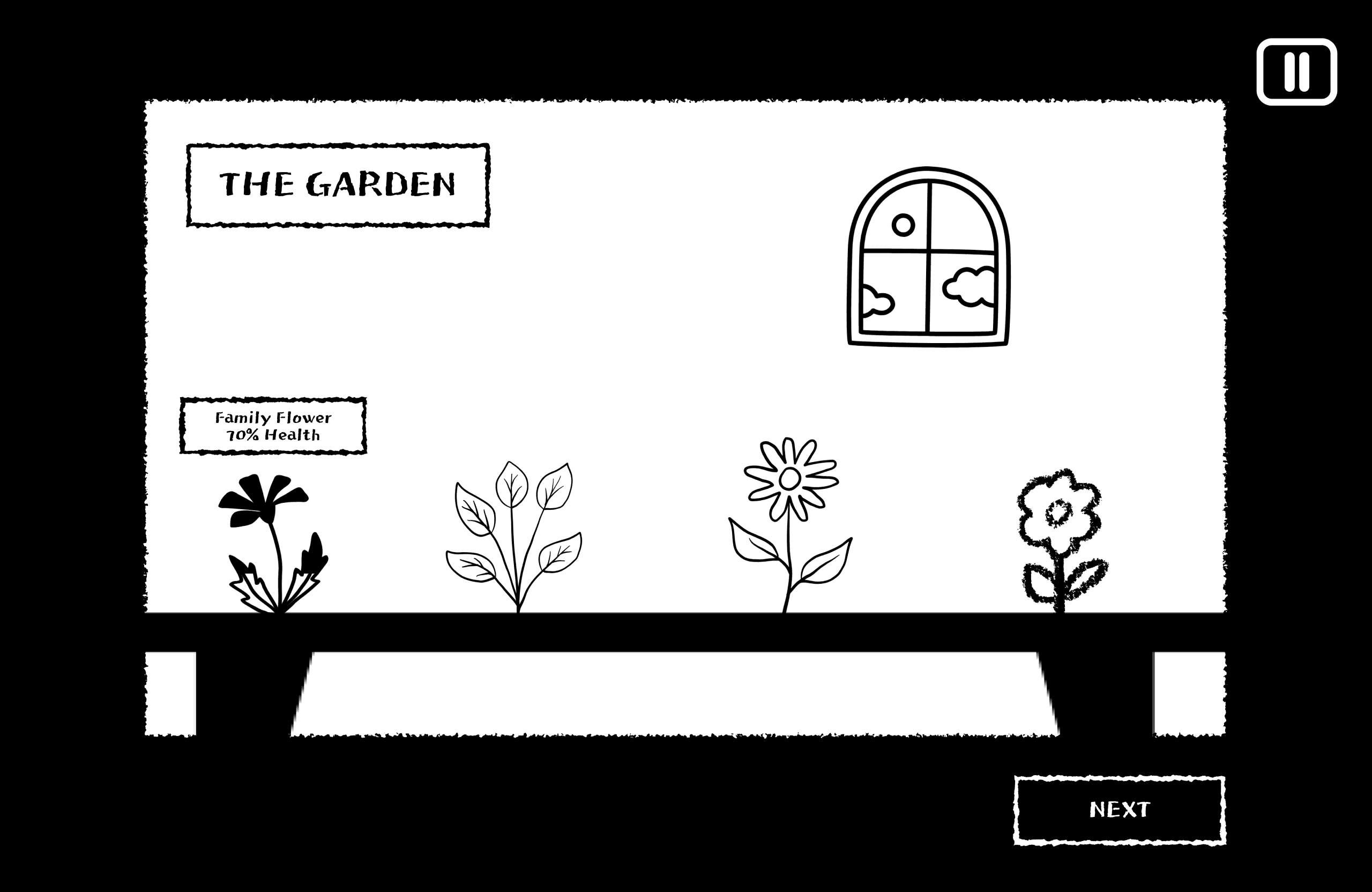
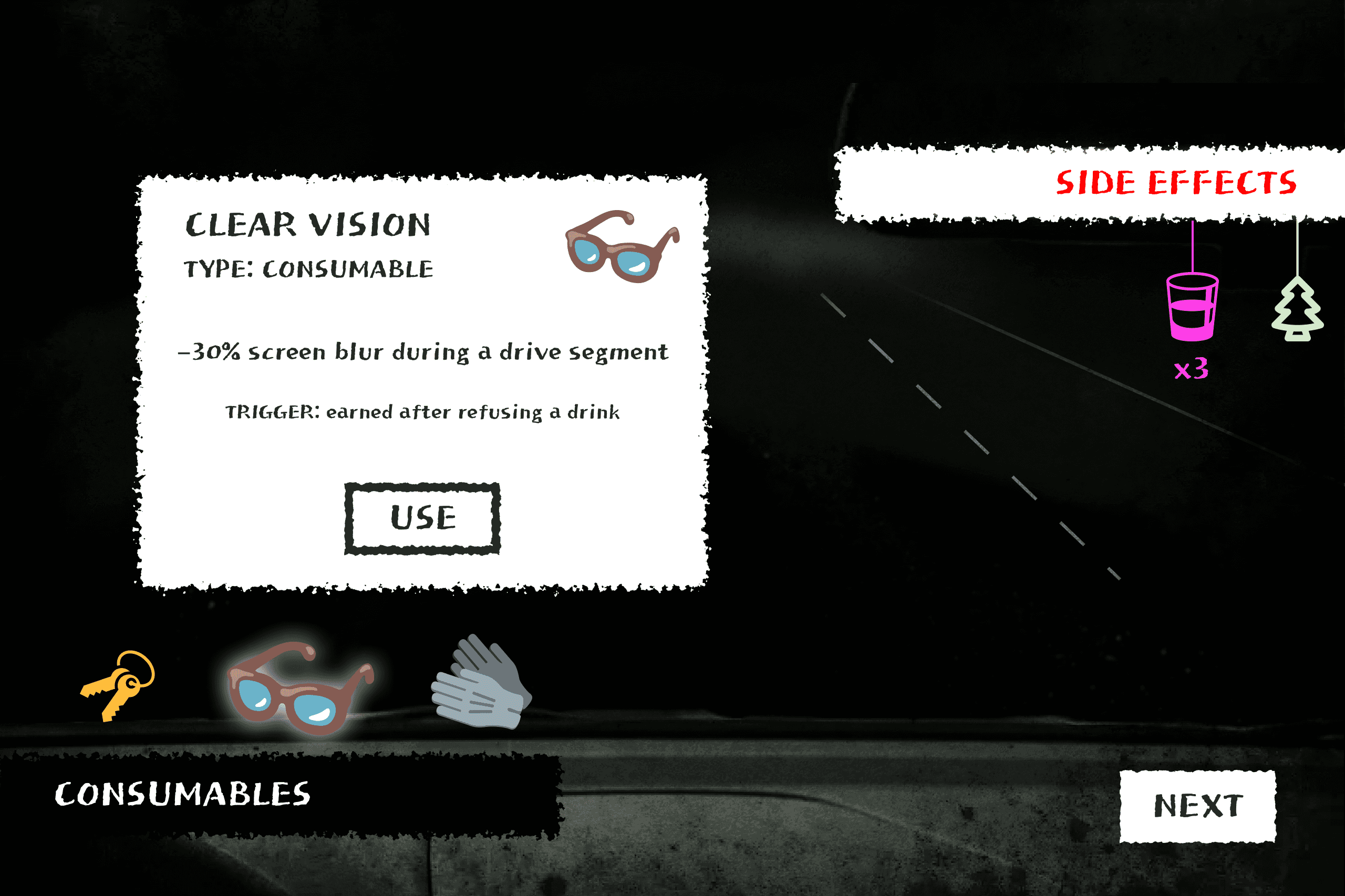
Originally, we imagined this screen as a garden representing the player's relationship with different aspects of their life including family, friends, career, and academics. Playtesting revealed that users found the garden largely disconnected from the rest of the game, so this shifted a buffs/debuffs section, while allowing us to communicate the consequences and rewards of certain player actions.
Visual
Design
Crafting the Visual System
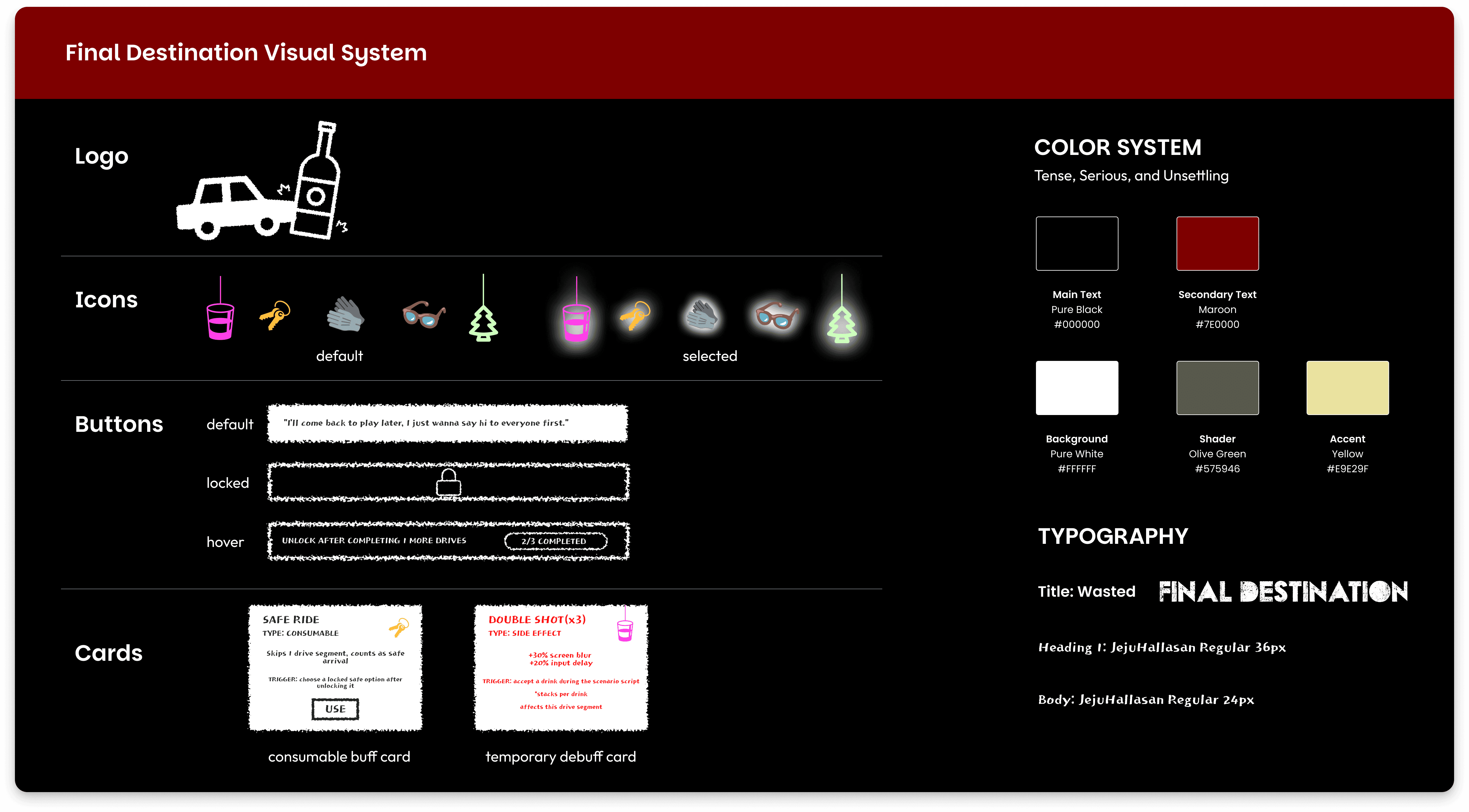
A video game’s visual design directly shapes how players experience and engage with it. Strong visuals support immersion, guide attention, and influence whether players stay invested or lose interest. We began by building a mood board to explore tone, references, and atmosphere, then translated those ideas into a cohesive visual system that informs the overall look and feel of the game.
Initial Mood Board

final visual system shown below in the showcase!
Showcase
Building a Better Experience for Students
After many iterations, we arrived at Final Destination. While there is still room to grow, we are proud to present the final visual system along with demo videos for each feature. You can explore the demos through the tabs below.
The Gameplay Loop
click on each tab to view the demos for each portion of the game!
The Cycle
Dice & Scenario
Buffs/Debuffs
Drive Home
Consequences
The Gameplay Loop
Players start with the Dice & Scenarios phase, and continues the loop as they keep playing. The various different scenarios that branch into a storyline, there is a different lesson in each and every loop!
Reflections
Lessons Learned: Designing with a Unique Medium
Designing a game instead of a traditional medium challenged me to rethink what users actually need, rather than what I assumed they needed.
Designing for Uncertainty
Uncertainty can shape how users explore decisions, encouraging learning through outcomes instead of relying on a single “correct” path
Show, Don’t Tell
Users internalize information more meaningfully when they experience outcomes themselves rather than being directly instructed
Balancing Engagement with Sensitivity
The way something is presented can completely change how it’s received, especially with serious topics
From Concept to System
Abstract ideas gain clarity when they are turned into tangible, interactive experiences
Next Steps
Further playtesting will guide refinements to the driving segment, focusing on clarity in decision-making and how users interpret consequences. Continued development will expand scenarios and deepen outcome systems to strengthen the overall experience.
Made by Jenny Zhang